OUR LAND !
OUR NATURE
SPEAKERS' BIOGRAPHIES
.jpg)
Ezekiel Ole Katato (Kenya)
Founder and Executive Director at Across Maasai Land Initaitve, an Elder, Culturalist and Advocate for Social Justice
Founder and Executive Director at Olakira Le Maa Trust (OLM). A Maasai elder, peace, cultural and environmental activist, Ezekiel graduated with a Higher Diploma in Range Management and animal health from the Animal Health Training Institute, Nairobi.
Ezekiel has worked directly with rural communities in the areas of education, health care, water, peace building, wildlife and environmental conservation. His work over the last two decades has been to seek solutions to address issues of inequality, marginalization and poverty among vulnerable groups. He has also contributed to local and global activities in culture, conservation, the changing climate and peace.
.jpeg)
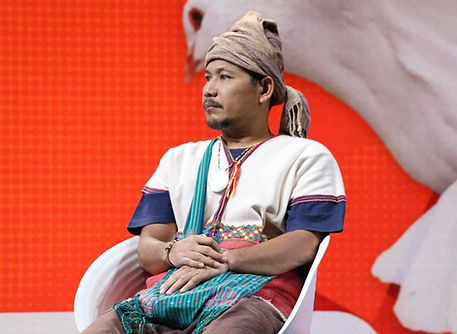
Krieangkrai Cheechuang (Thailand)
Council of Indigenous Peoples of Thailand & Karen Network for Culture and Environment
Krieangkrai Cheechuang (Kai), is an Indigenous activist from the Pwo, or Plong Karen, Indigenous people in Thailand. He was born in Ban Kha District, Ratchaburi Province, where he became active in protecting and promoting the rights of Indigenous peoples at a young age, after his people were affected by government policies. He has worked as an Indigenous human rights defender since receiving human rights training in his early twenties. He is a key figure driving public policy on Indigenous peoples’ rights in Thailand and is currently the President of the Council of Indigenous Peoples in Thailand (CIPT) and the coordinator of the Karen Network for Culture and Environment (KNCE) for the western region.

Dorothy Cheruto (Kenya)
Indigenous advocate working with Ogiek Peoples Dev. Program & the Hunter Gatherer Forum Kenya (HUGAFO-K)
An Indigenous Ogiek woman from Kenya and a human rights advocate working with Ogiek Peoples Development Program and Hunter Gatherer Community Forum Kenya (HUGAFO-K). Her work focuses on Indigenous peoples’ land rights, conservation justice, women’s empowerment, traditional knowledge preservation, and community-led environmental protection.
In 2025, she participated in fact-finding and documentation work on the impacts of the Sasimwani evictions, documenting how conservation-related displacement affected Indigenous families through loss of land, livelihoods, food systems, education, and cultural connection. She has also conducted research and community documentation on Indigenous food systems and the role of traditional ecological knowledge in biodiversity conservation and climate resilience.
Dorothy supports socio-economic empowerment initiatives for Indigenous hunter gatherer women through traditional beadwork, cultural preservation, and sustainable livelihoods, and has been involved in community herbal and indigenous tree nursery initiatives aimed at protecting medicinal plants and restoring Indigenous ecosystems. Through her work with Indigenous hunter-gatherer communities across Kenya, she continues to advocate for conservation approaches that recognize Indigenous peoples as custodians of nature and essential voices in global climate and conservation discussions.
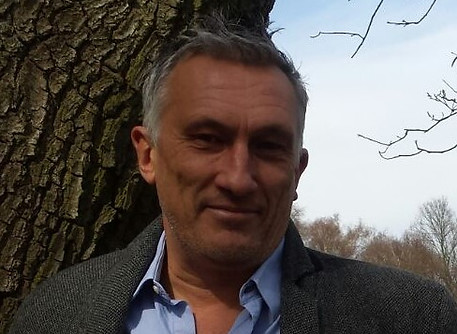
Simon Counsell (UK)
Independent researcher and author on conservation, human rights and “Nature-Based Solutions”
has been involved in the environmental and indigenous rights movements for nearly 40 years. After graduating in Environmental Science, he worked with Friends of the Earth for nine years, as their forests campaigner. He was Chair of the Board of Friends of the Earth England, Wales and Northern Ireland from 2006 to February 2012. After gaining a Master’s Degree in Tropical Forestry and Land-use at Oxford University, he led the Rainforest Foundation UK from 1996 to 2019. He has played a leading role in international efforts to protect the rainforests and their inhabitants, especially in the Congo Basin region of Africa. He is a passionate advocate for a rights-based approach to environmental protection.Since 2020 he has been an independent researcher and writer, and an advisor to Survival International, especially on issues related to so-called ‘nature-based solutions’, such as carbon and biodiversity trading and their impact on Indigenous People.
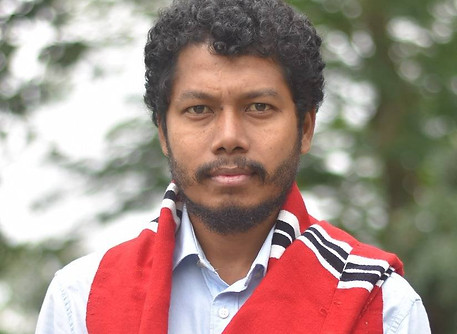
Pranab Doley (India)
Indigenous activist from the Mising people
Pranab Doley is an Indigenous activist from the Mising people. He is a founding member of many organisations, including: JKSS, a farmers and Indigenous rights organization; CNAPA, the Community Network Against Protected Areas and the All Kaziranga Affected Communities’ Rights Committee. As an Indigenous activist he has led many successful movements, including against an Asia Development Bank solar project in Assam, which was due to displace 20,000 Indigenous people from their homes. He has an MA in Social Work from the TATA Institute of Social Sciences. He has twice stood in the Assam Assembly elections, in 2021 coming second to a sitting cabinet minister. Pranab has been instrumental in bringing global attention to large-scale human rights violations in and around Kaziranga National Park, holding the Forest Department and conservation NGOs to account. As a result of his activism, he has been threatened and harassed by the authorities and had multiple false criminal cases filed against him.

Timothée Emini (Cameroon)
Baka Indigenous rights activist, legal advisor, and academic trailblazer from Cameroon
Timothée Emini is a member of the Baka Indigenous people, from the East Region of Cameroon. Holder of a PhD in public law from the University of Yaoundé, he became the first Baka Indigenous person to defend a doctoral thesis. A specialist in international law, his work focuses on environmental law, international human rights law, and the protection of Indigenous peoples' rights.
He is co-facilitator of Gbabandi, the platform of Indigenous forest peoples of Cameroon, where he is responsible for partnerships, impact, and program monitoring. For several years, he has facilitated Indigenous communities' access to citizenship, supporting them through the process of obtaining birth certificates and national identity cards.
He has extensive experience within the global Indigenous movement, as well as experience collaborating with national, regional, and international organizations. In 2024, he received the "Mundo Negro a la Fraternidad" award in Madrid, in recognition of his leadership and commitment to the cause of Indigenous peoples.
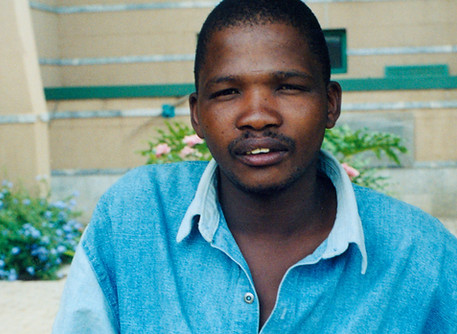
Jumanda Gakelebone (Botswana)
Kua Indigenous rights activist
Jumanda Gakelebone is a Gana Indigenous person from the Central Kalahari Game Reserve (CKGR). Jumanda joined the Indigenous organisation, First Peoples of the Kalahari, in 1997, following the first government evictions from the CKGR. The government used the game reserve status of the CKGR to justify the expulsion of people from their homes, and evicted hundreds more from their homes up until 2002.
During the evictions, Jumanda supported the people of the CKGR to know their rights, fight abuses at the hands of wildlife scouts, and bring their situation to the global stage. He was instrumental in supporting the High Court case against the evictions, which culminated in a landmark victory and saw the Indigenous peoples of the CKGR return to their ancestral land.
Following the court case, Jumanda has continued his advocacy and has helped to improve living conditions inside the CKGR that previous governments have tried to make inhospitable, to drive people away. Now, under President Duma Boko, he is supporting community organising to make the most of the opportunity presented by the new human rights-focused government to secure land rights and improve livelihoods in the CKGR.
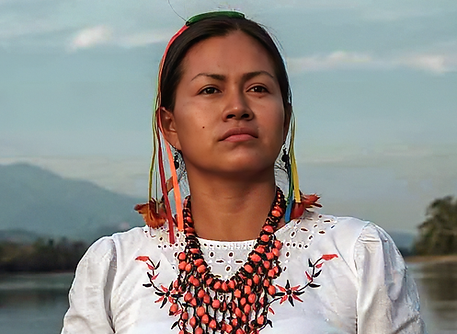
Marisol García Apagüeño (Peru)
Kichwa Indigenous rights activist and delegate of the indigenous organization COICA
Marisol is an Indigenous leader from Peru and a prominent advocate for Indigenous women’s rights, territorial defense, and environmental justice. She previously served as Youth Secretary of CODEPISAM and President of the Federation FEPIKECHA.
She currently represents COICA within the Global Alliance of the Women’s Movement and is President of the Asociación de Mujeres Sinchi Warmikuna. She also serves as Secretary of the Network of Women Defenders of Life and is a member of the Yaku Warmikuna Women’s Network.
Marisol has brought the demands and struggles of her people to national and international spaces, including the Peruvian Congress, the Inter-American Commission on Human Rights (IACHR), the UN Climate COP, and the Biodiversity COP. Her work focuses on defending Indigenous territories, strengthening women’s leadership, and challenging the impacts of extractivism and imposed environmental policies on Indigenous communities.
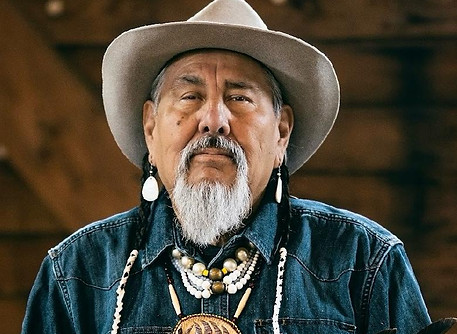
Tom Goldtooth (USA)
Dakota and Dineh Indigenous rights activist and Executive Director of the Indigenous Environmental Network
Tom is the Executive Director of the Indigenous Environmental Network. Tom has been awarded with recognition of his achievements throughout the past 40 years as an activist for social change and environmental and climate justice. From the strength of his community organizing and leadership he has brought the local issues of environmental, economic, energy, climate justice and the rights of Indigenous peoples to the national and international levels. Tom initiated the first international Indigenous conference on the rights of Mother Earth in 2012 at the Haskell Indian Nations University and serves as a member of the Steering Committee of the Global Alliance of the Rights of Nature. Tom is a recipient of numerous awards including the 2015 Gandhi Award and in 2016 was presented Sierra Club’s highest recognition, the John Muir award. Tom is a Sun Dance leader and active in his ceremonial responsibilities and is a father, grandfather and great grandfather.

Sophie Grig (UK)
Senior campaigner at Survival International
Sophie is the Research and Advocacy Director at Survival International. She has been campaigning for the rights of Indigenous peoples in Asia and the Pacific at Survival for more than 30 years. She is currently working on Survival’s campaign to decolonize conservation and for the rights of uncontacted peoples. Sophie has visited and campaigned alongside Indigenous peoples in Siberia, Bangladesh, India, Indonesia, Nepal, Malaysia, Thailand, Cambodia and West Papua. She holds a degree in Religious Studies and Anthropology and an MPhil in Anthropology.
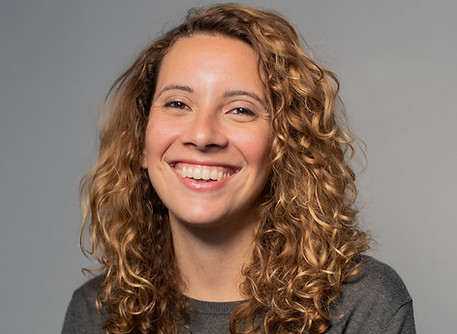
Fiore Longo (Argentina)
Senior campaigner at Survival International
Fiore Longo holds a degree in anthropology and is Director of Survival International France and Spain, an organization that has been advocating for the rights of Indigenous peoples for over 50 years. She is also a lecturer at Sciences Po Paris, where she teaches on colonial conservation and Indigenous rights. Since 2018, Fiore has led Survival International's campaign to decolonize conservation, which has resulted in major funding cuts and structural changes to conservation projects found to be violating Indigenous peoples' rights. She has conducted fieldwork in numerous Indigenous communities across Africa and Asia affected by human rights abuses committed in the name of conservation. She is the author and editor of several publications on Indigenous rights, climate change and conservation. In 2023, she co-edited Decolonize Conservation: Global Voices for Indigenous Self-Determination, Land, and a World in Common (Common Notions Press), and published Décolonisons la protection de la nature ! Plaidoyer pour les peuples autochtones et l'environnement (Double Ponctuation). She is currently a member of the Advisory Council on Indigenous Peoples Affected by Protected Areas at the University of Arizona's Indigenous Peoples Law and Policy Program, James E. Rogers College of Law.
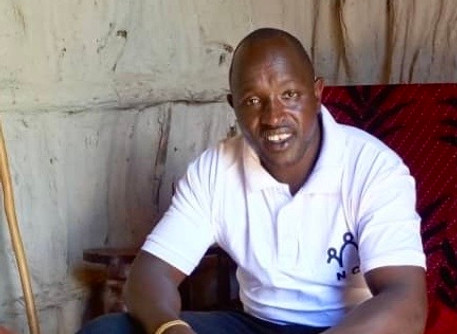
Mirihai Ngilepoi (Tanzania)
Chairperson of Eluai Village, in the Monduli District of the Arusha region in northern Tanzania.
Mirihai Ngilepoi is the Chairperson of Eluai Village, in the Monduli District of the Arusha region in northern Tanzania. He is a Maasai pastoralist and was elected chairperson of the village in 2024.
Mirihai has been a staunch advocate for community rights, particularly in challenging the carbon credits contract signed by his predecessor with Soils for the Future, which was executed without the villagers' free, prior, and informed consent. His unwavering commitment to this cause led to a significant development when Soils for the Future formally accepted the termination of the contract in April 2026.
He is currently recognized as an energetic activist, championing the interests of his community and promoting sustainable practices.
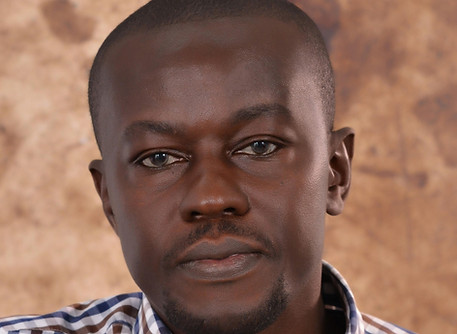
Mordecai Ogada (Kenya)
Carnivore ecologist and conservation scholar
Mordecai Ogada is a carnivore ecologist and conservation scholar who has been involved in conservation policy and practice for the last 18 years in Kenya and other parts of Africa, mainly on human-wildlife conflict mitigation and carnivore conservation. Over the last three years, Mordecai has been engaged in examining the policy problems and prejudices that underlie the challenges experienced in wildlife conservation, particularly in the global South. These issues form the central theme of ‘The Big Conservation Lie’ a book focused on Kenya co-authored with John Mbaria. He is currently the Executive Director of Conservation Solutions Afrika, a natural resource management consultancy based in Nanyuki. Dr. Ogada consults for Survival International on the Impact of Conservation Practice on the lives and rights of Indigenous People, particularly in Africa.
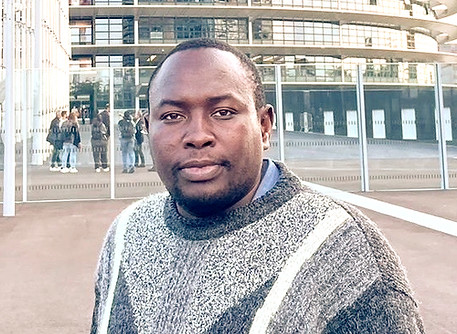
Joseph Oleshangay (Tanzania)
Maasai lawyer and human rights activist specializing in Indigenous land rights and environmental justice
Joseph Moses Oleshangay is a human rights lawyer and activist, born in Ngorongoro, Tanzania. A licensed advocate at the High Court of Tanzania, Joseph works with the Legal and Human Rights Centre (LHRC) in Arusha. He has represented Maasai communities in dozens of cases in both national and regional courts (including the East African Court of Justice), challenging forced evictions and land dispossession in Ngorongoro, Loliondo, around Kilimanjaro International Airport, and other places, where tens of thousands of Maasai have been evicted. Joseph is a recipient of the Weimarer Prize (2023) honoring his work to defend the Maasai’s ancestral land from state-driven evictions. He was also involved in high-level advocacy meetings in Germany, Austria, France and the European Union.
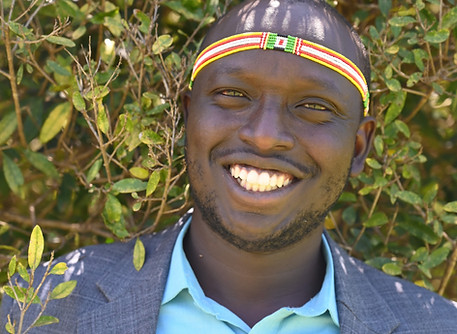
Kipchumba Rotich (Kenya)
Sengwer from the Cherang’any Hills, Kenya, and an advocate for Indigenous land rights, ecological justice, and peaceful social change
He is a proud Sengwer Indigenous person from the Cherang’any Hills, Kenya, and an advocate for Indigenous land rights, ecological justice, and peaceful social change. He currently assists in coordinating the East Africa Indigenous Women-Led Assembly, where he works alongside women leaders across the region in struggles for land, dignity, and environmental justice.
He is a graduate of the University of Eldoret with a Bachelor of Computer Technology and currently pursuing a law degree at Moi University, inspired by his community’s experiences of displacement and the need to understand the legal systems affecting Indigenous peoples.
He has spoken locally and internationally on issues of land rights, conservation-led evictions, and climate justice. He strongly advocates for non-violent methods of rights agitation, community organising, and solidarity. He is also a critic of fortress conservation and false climate solutions such as carbon markets, which displace Indigenous communities in the name of environmental protection. For him, the struggle for land is about memory, justice, and survival.
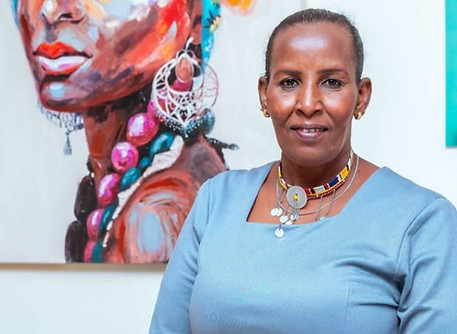
Margaret Super (Kenya)
Founder and Executive Director of the Pastoralist Peoples' Initiative (PPI) in Kenya
Margaret Super is the Founder and Executive Director of the Pastoralist Peoples' Initiative (PPI), a grassroots organization dedicated to empowering Indigenous pastoralist communities across Kenya's arid and semi-arid lands. She comes from the Rendille Indigenous people in Marsabit County, where she has lived and worked alongside pastoralist families facing challenges from climate change, land insecurity, and systemic marginalization.
She founded PPI out of a commitment to justice, cultural dignity, and the belief that pastoralist voices, especially women's, must be meaningfully included in decision-making processes. Her work focuses on amplifying Indigenous land rights, advancing climate resilience strategies rooted in traditional knowledge systems, and strengthening women's leadership in community governance and economic empowerment.
Over the past 15 years, Margaret has led community-driven advocacy initiatives, legal awareness campaigns, and multi-stakeholder dialogues addressing land governance, toxic waste accountability, and pastoralist conflict resolution in Northern Kenya. She has been fighting land grabs driven by conservation and carbon credit projects, defending pastoralist communities' rights to their territories.

JA Shivu (India)
Youth leader from the Jenu Kuruba Indigenous people in southern India
JA Shivu is a youth leader from the Jenu Kuruba Indigenous people in southern India. Before he was born his family was evicted from their ancestral village, Karadi Kallu, in the name of conservation. As a result, he grew up living in slave-like conditions on a coffee estate just outside Nagarhole National Park and Tiger Reserve. In 2025 he was instrumental in the courageous return of 52 families to their original village inside the Tiger Reserve. Despite threats and intimidation from the forest department and police the community is still there more than a year later. He is youth leader of Nagarahole Adivasi Jamma Paale Hakku Sthapana Samiti (NAJHSS) and a founder member of the organization Community Network Against Protected Areas (CNAPA).
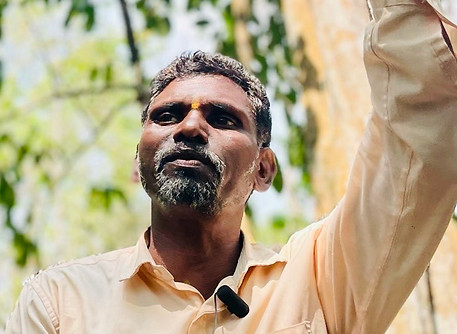
JK Thimma (India)
Shaman and recognized leader within the Jenu Kuruba people
JK Thimma is a shaman and recognized leader within the Jenu Kuruba people. His forest home, in southern India, has been turned into the Nagarhole National Park and Tiger Reserve, without the consent of the Indigenous people who have managed and protected it for generations. He has been fighting for more than 30 years for the rights of his people and to protect their forest from the ravages of tourism and fortress conservation. In the 1990s he was a key figure in the campaign which successfully stopped the Taj hotel group building a luxury resort inside the Tiger Reserve. He has faced imprisonment and even death threats, but remains strong and determined in his fight against evictions and colonial conservation across India. He is the President of the Nagarahole Adivasi Jamma Paale Hakku Sthapana Samiti (NAJHSS) and a founder member of the organization Community Network Against Protected Areas (CNAPA).
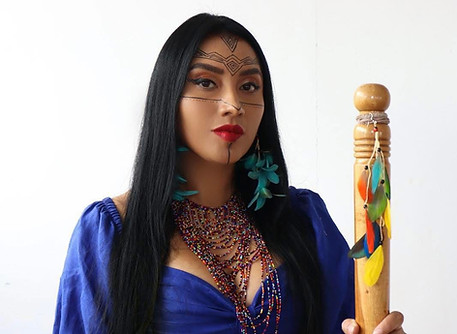
Pashpanzhu Vitery (Ecuador)
Kichwa Indigenous rights activist and member of the indigenous organization PAKKIRU
Paz is a Kichwa leader and territorial defender from Pastaza, Ecuador, with more than 20 years of experience in Indigenous organising, territorial governance, and the defense of collective rights. Since childhood, she has participated in the struggles of the Kichwa peoples of the Ecuadorian Amazon, including the historic 1992 Indigenous march demanding legal recognition of ancestral territories and Indigenous rights.
She has worked extensively with Kichwa communities on territorial planning, mapping, ancestral land management systems, and the development of life plans grounded in the principles of Sumak Kawsay (“Buen Vivir” or “Living Well”). Through her work with the Instituto Kichwa de Biotecnología Sacha Supay (IQBSS), she contributed to processes that led to the legal recognition of more than 245,000 hectares of ancestral territory. Paz has also played a key role in community resistance to oil extraction projects and in strengthening Indigenous autonomy, self-determination, and governance systems. Since 2023, she has served as Vice President (Yapanapak Kuraka) of PAKKIRU, the Kichwa Nation of Pastaza, representing around 200 communities and 25,000 people in the Ecuadorian Amazon